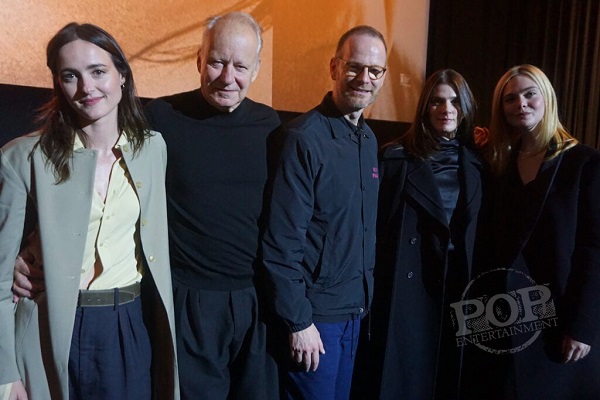
Renate Reinsve, Stellan Skarsgård, Elle Fanning, Inga Ibsdotter Lilleas & Joachim Trier
The Norwegian Feature Sentimental Value Offers A Deep Exploration into Family, Creativity and Reconciliation Through Art
by Brad Balfour
Now that award season is in full swing, certain films have unexpectedly bubbled up as the attention- grabbers. One such film is Norwegian director Joachim Trier’s Sentimental Value. With a brilliant cast – which includes Elle Fanning, Inga Ibsdotter Lilleas, Stellan Skarsgård and Renate Reinsve – the film has been at the top of both the international feature lists as well for Best Picture. Veteran actor Skarsgård has already won a Golden Globe for Best Supporting Actor in a Drama. Like many of the films this year, a number of non-English language films have been considered some of the best of the year regardless of the language.
Now, a record showing for non-English-language films have entered the Oscar race with nominations for Sentimental Value at the top of the list, garnering positions in such categories as Best Picture, International Feature, Best Actress, Supporting Actor, Supporting Actress and more. As Variety‘s Scott Feinberg wrote, “The 2026 Oscar noms reflect the Academy becoming a citizen of the world. At a time when the leadership of the United States is projecting an ‘America first’ attitude, the L.A.-based Academy of Motion Picture Arts and Sciences is doing the opposite.
“Indeed, the Oscar nominations that were announced on Thursday morning were as geographically inclusive as any in the 98-year history of the Academy. Feature-length films that are primarily or entirely in a language other than English collectively landed 22 noms, tying a record set in 2023 and matched in 2024.”
Sentimental Value centers around estranged sisters Nora (Reinsve) and Agnes (Ibsdotter Lilleas), who reunite with their once-famous director father, Gustav (Skarsgård), after their mother’s death. In his 70s, he is trying to revive his faltering career with a personal film project based on actual elements in his family’s history. Initially he wants Nora as his star, but she refuses so he turns to casting a Hollywood star Rachel Kemp (Fanning). This leads to confrontations about art, legacy, and family trauma, blending humor and heartbreak.
For many, the film deeply resonates, praised for its emotional authenticity, nuanced performances, and thoughtful exploration of family dynamics and generational conflict. Lauded for its strong script, and cinematography, there’s a delicate balance between realism and artistic expression revealed through its strong cast. Some have found the narrative too complex and abstract, suggesting a distinct European viewpoint looking into such deeply felt emotional twists and turns. Despite some mixed opinions, Trier’s film is widely regarded as a significant and impactful work of contemporary film-making – one commanding audiences’ attention.
This conversation took place after a screening held before all the awards brouhaha. Sadly, it was only a short discussion, but this edited Q&A gives an idea of the impact the film had on its cast and creator.
A movie like this obviously invites some curiosity about the relationship between directors and actors. In a few words, could you sum up what that was like for you on this production, your relationship with your team and vice versa.
Joachim Trier: I’ll start because I was lucky enough to invite this group into the film. I’ll do a quick little introduction of the process. Thank you for starting there. Renate is now my friend from quite long ago. We’ve done two films together before this one. In my anxious early moments of writing this with Eskil Vogt, my co-writer, at least we knew we had Renate.
Because I went to you [Renate] before I’d written almost anything and told you about the characters and the story, that meant a lot to us that you accepted. That gave us faith. Then, I’ve had this dream for many, many years, to work with Stellan Skarsgård. [His character] Gustav Borg was shaped much more after we got a feeling that he would accept because I went and talked to him as well. So at least I had you two. Then came the challenge of finding two amazing actors that could match this amazing couple.
First, I met Inga after meeting a hundred people in Norway. You [Inge] came in and we had several conversations and got to know each other a bit. I think that’s important because I’m not only casting you, you’re kind of casting me too, so we could work together. Can I help you be the great actor that you are? We both agreed to do this. You and Renate had some amazing chemistry. So that gave me faith that something was happening. Then we had to find the outsider. The pivot of the story.
It turned out she wasn’t an outsider at all. It was Elle Fanning, who has just been such a joy. You [Elle] came to Oslo and did a bit of rehearsals with us, and we got to know each other. It turns out that we make movies the same way everywhere in the world it seems. Even though you made most films in America, I think we found a great way to work together. Everyone always asks Elle; I just wanted to say that you didn’t come from America. Yes, the film presupposes that there are these cultural differences. But the film also shows, I think, that it’s about different stuff whether it works or not. It’s about the dynamics of relationships more than anything. It’s not about national identity or something [like that]. Anyway, I’m so proud. I can keep going. I’ll stop now. I love these people.
Can any of you comment on your relationship with your team?
Renate Reinsve: In the first movie I did with your team I had one line. It was supposed to be “Let’s go to a party.” As you can hear, that’s very well done. So he wanted to cast me. We are so silly. We have had the whole day off. We usually don’t. We are just completely discombobulated – or I am. That’s the only good English word I have. When we worked on Worst Person in the World, we had that kind of artistic chemistry… It’s really, really rare to have that chemistry and have that kind of collaboration. We’ve recognized that. I would, of course, always say yes to you. I was so grateful that you wanted me to do another movie. And I can’t talk today.
Joachim Trier: It feels good. Don’t worry.
All these questions are for you. What are we going to do?
Renate Reinsve: All the questions? I also really enjoyed being challenged in this way in this movie, because Julie [in Worst Person in the World] was very open and naive and hadn’t settled in her life. But Nora [here] has kind of made her choices. She is set in her life, because she carries so much emotional weight, to go into that with more layers and deeper work in a way. It was really great to work with you again. I hope it comes across how happy and grateful I am in this chaos of talking.
Joachim Trier: Very good.
Stellan Skarsgård: I was waiting for Joachim to call me because I’ve seen his films and they’re very beautiful. And he’s getting better and better and better. But he never called. Then eventually, he called. He took his time, but he did. It was a pleasure doing it because it also was kind of different, this character. You have to play [him] on several levels at the same time. You have to play a man who’s behaving badly, but at the same time wants to be connecting with his daughters. At the same time, he’s weak and he’s stumbling and does not know how to do it. So it’s playing [him] on several levels. Usually I’m used to playing one thing at a time; here we have all this mixture of confusion, in a way. But the way we worked with the other actors it’s fantastic. You have an absolutely closed set, in a way, so it’s absolutely calm, safe, and you feel covered. There you can play whatever. You can do whatever you want.
Inga Ibsdotter Lilleas: I really appreciated how much time you took to get to know me, very early in the auditioning process. I’ve never experienced that before, that a director in the second audition takes like half an hour to just talk about stuff in life, art, our feelings and our families. It’s such a brilliant way to get to know someone, and to make someone feel very safe and respected.
That makes it easy to give everything, and to be very raw and emotional. I feel like you do that with everyone. The whole set is like that. Everyone’s very emotionally invested. That makes, at least for me as an actor, it makes me very open. I’m not afraid to be vulnerable, which is a very nice feeling and very important. I think working on this movie, and working with Joachim was like what I thought acting was going to be when I was young. It’s almost never been like that. So I felt like I came to heaven. I remember the last day on set I was so heartbroken. I was so sad. I told you. And you saw, I cried a lot. That was a sad day, but also a good day because I knew that I’d experienced something very special.
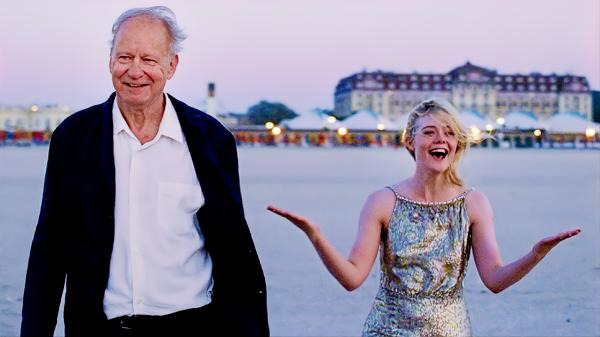
Elle Fanning: Well I, like all of you, have been a huge Joachim fan before this. But I didn’t know if there would ever be a part for me in one of his films. I was here in New York, and remember very vividly, and it happened very fast, I must say, but my agent called me and said, “Joachim’s just doing a new movie.” And I’m like, “Yes!” I would have said yes to anything. I would have said “Let’s go to the party.” But after reading the script, obviously it just stands out as such a beautiful story. But also the character of Rachel really spoke to me. Then you start to think, “Okay, I want this so bad.” I knew I would do it.
We set up a Zoom call in the morning to talk to Joachim. He was in Oslo and I was in New York. We got on Zoom. I picked out my shirt to wear. Immediately we just connected. It was what everyone has said, where he gets to know you on this personal level. Even though, in this case, it was just over the computer, again, I just felt so safe. I felt like he understood me which, as an actor, is what you want – for your director to really see you. Then you feel safe to open up. After that talk, actually, we knew that we were going to work together. That was a relief. Then I flew to Oslo and we had a week of rehearsals. It was just, I think for all of us, felt like it was a very profound feeling because it was like lightning in a bottle with this film set, in a way. I feel like now, if I don’t work with Joachim again, I feel like I will be trying to recreate the experience of it.
Joachim Trier: Can I say something just quick? I just want to note that you came for a week and we did rehearsals. Then you went and did Predator. That’s probably showing in this building. You came back to us and we shot the film. From what I hear, you do an amazing job in that other film, too. You were amazing. I think we should give her a round of applause.
Elle Fanning: When I was able to do this movie, it was like there was a conflict with both films. It was like the first time that two studios were kind to each other and worked together to make it happen.
Joachim Trier: They were lovely.
Elle Fanning: It was incredible. Joachim could have just gone and picked someone else but thank you.
Based on what you said about this thing of visibility, the character you play is similar to yourself, a Hollywood star – being in the spotlight and hyper-visible. But at the same time, you exhibit this kind of vulnerability that’s so inviting. For you, and Joachim, it’s about living in such a vulnerable space while you’re constantly being seen. That’s just the art of acting in general, but it’s something that came to mind.
Elle Fanning: Thanks for saying that. That was important for me to get across somehow. When we find Rachel, she is definitely lost and longing and searching for something. She has this great well of emotion that no one has ever tapped into of her. She knows that she has talents, and she feels them in her bedroom. But she’s like, there’s no camera to capture it. Not that that’s life.
But for her career, she’s like, “Why can’t someone see me in that way?” Then after seeing Anna, Gustav’s movie, that makes her so moved and makes a really bold choice – probably against her agent’s wishes or whatever, to go to Norway and do that. But through the experience, she really gains this confidence, and you see that she is a good actor.
We didn’t want to do the cliched version of her… But then at the same time, I have to be a little off. She is miscast. I loved balancing all of those things and it was definitely a real challenge in calibrating it. But ultimately, she does a really brave thing in walking away from something that she wants very badly. There’s a bit of a moral dilemma in her, but ultimately, it’s the experience that will make her better.
She really learns something. I’ve had to learn that as an actor. You have incredible experiences and it’s a film that no one sees. But you grow and have the experience and that’s maybe something that she hasn’t looked at before. She’s been a little bit more focused on the beginning of the result of something and finally she’s become grounded a bit by the experience. Yeah, it’s very great.
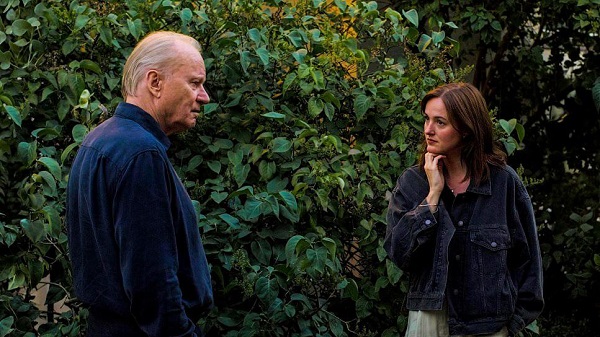
Stellan, in your final scene with Elle, you saw it all at this safe distance before finally going in, speaking with her and embracing her. That unlocks the entire thing you’re doing in this movie. There’s almost this dance between physical and emotional proximity. Talk about that process where you seem to be constantly wrestling with how close to getting to your daughters, or, in many ways, three daughters.
Stellan Skarsgård: Yeah. It’s also a physical thing, of course. You are reacting physically to different people and relationships that you have. That end scene was wonderful to do because I don’t say much in it but I’m just sitting and listening to Elle and see her break down. She also tells me something that I didn’t know – that I am actually using her. I made her dye her hair. I’m projecting my daughters in the genre. That’s devastating information for me to get. The lovely thing about this film is that all the characters don’t know themselves what they’re doing all the time. There’s so much misunderstanding, so much lack of self-understanding. It’s a delicate thing.
Inga and Renate, sorry that you have to speak more…
Renate Reinsve: good luck to my brain…
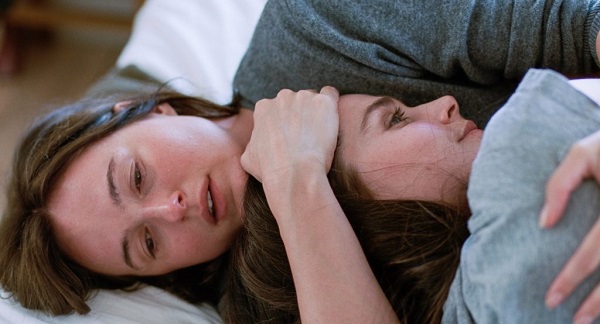
In that gorgeous final scene that you have together where you go from the floor eventually to the bed. Talk about creating that kind of intimacy in a story where your characters, even though you’re very different, already have some rapport, some relationship. We learn so much more about the roles they have in those final moments. What did you yourselves learn or access in those parts of the characters that are finally revealed to us in very beautiful ways towards the end?
Renate Reinsve: We had a lot of rehearsals so that we are led into the characters and then we do things pretty chronologically. So when we get to that point, we know so much about them and have lived through so many moments with them [together] and apart. I think what I loved in playing this character was finding the dynamic between what she knew about herself and what she didn’t know. That was interesting because I think it’s so true that we know so little that is so essential to how we make choices and how we live.
When we got to that point, we were really nervous about that scene. We knew it was the pivotal scene in the movie, so everyone was very lean on that day. I think because we have worked so detailed in talking about it and preparing for it, we are also allowed to let go and be very free. So some parts of it are improvised but it’s not only me and Inga, it’s the whole room, the messages, the small whispers we get from Joachim behind the camera and Casper, the cinematographer, moving really quickly into something that happened on an impulse. Inga is climbing up on the bed with Nora, and it wasn’t planned. Then also I felt because of the process Joachim has as director we’re actually allowed to discover these things in the moment. So the depth of what they’re going through and what the situation is, I felt that I was actually discovering it at the moment. I said many words.
There’s this cliché that a space can also be a character but in this film, the house really is such an important aspect both in the present and in the character’s memory. Could you tell what it was like using the physical space around you that was so beautifully designed just to access the thoughts of the story?
Stellan Skarsgård: I know the set designer, I’ve worked with him before. When I read the script I said, “Oh no, don’t look at this because I knew it was a dream for a set designer with all the different periods of time. It was not only a cinematic gimmick, it was a cinematic faithfulness that Joachim had written into the script and it played a very important role as an image of time and another perspective to look at human behavior.
Joachim, how did your own background as both a new parent as well as someone who really comes from a family of filmmakers influence the creation of the story?
Joachim Trier: I think that’s what [was] created. I wanted to tell this story [since] I’ve been around people who make films – my grandfather, my parents – but was trying not to make an exclusive story about that. I was trying to see how can I tell a story about that in a good light. Or in a good light about family life and the fact that we all feel that we’re forced into these goals whether [it’s] going home for Thanksgiving suddenly, oh, I’m 12 years old again and they’re expecting me to do this, but I feel different. Or whatever it is.
How can we use this kind of meta level [about] for these creative people to talk about the roles, trials and tribulations of a family? That’s affected, of course, by me now, being a dad and trying to be the perfect father, which I know is completely impossible. So I tried to do a story about forgiveness without having my kids who are so small, so I hope I haven’t made the mistake of “you’re so boring” yet. I will also add that Stellan Skarsgård has eight kids that it seems like he has a really great relationship with, so he gives a lot of advice which is an extra joy from a good dad that he is in real life. I’ll end there.
Copyright ©2026 PopEntertainment.com. All rights reserved. Posted: March 9, 2026.
Photo 1 ©2025 by Brad Balfour.
All other photos ©2025. Courtesy of Neon. All rights reserved.
 PopEntertainmentblog.com